
The Body Lands After The Mind: Returning Home After 30 Days Of Hyper-Vigilance
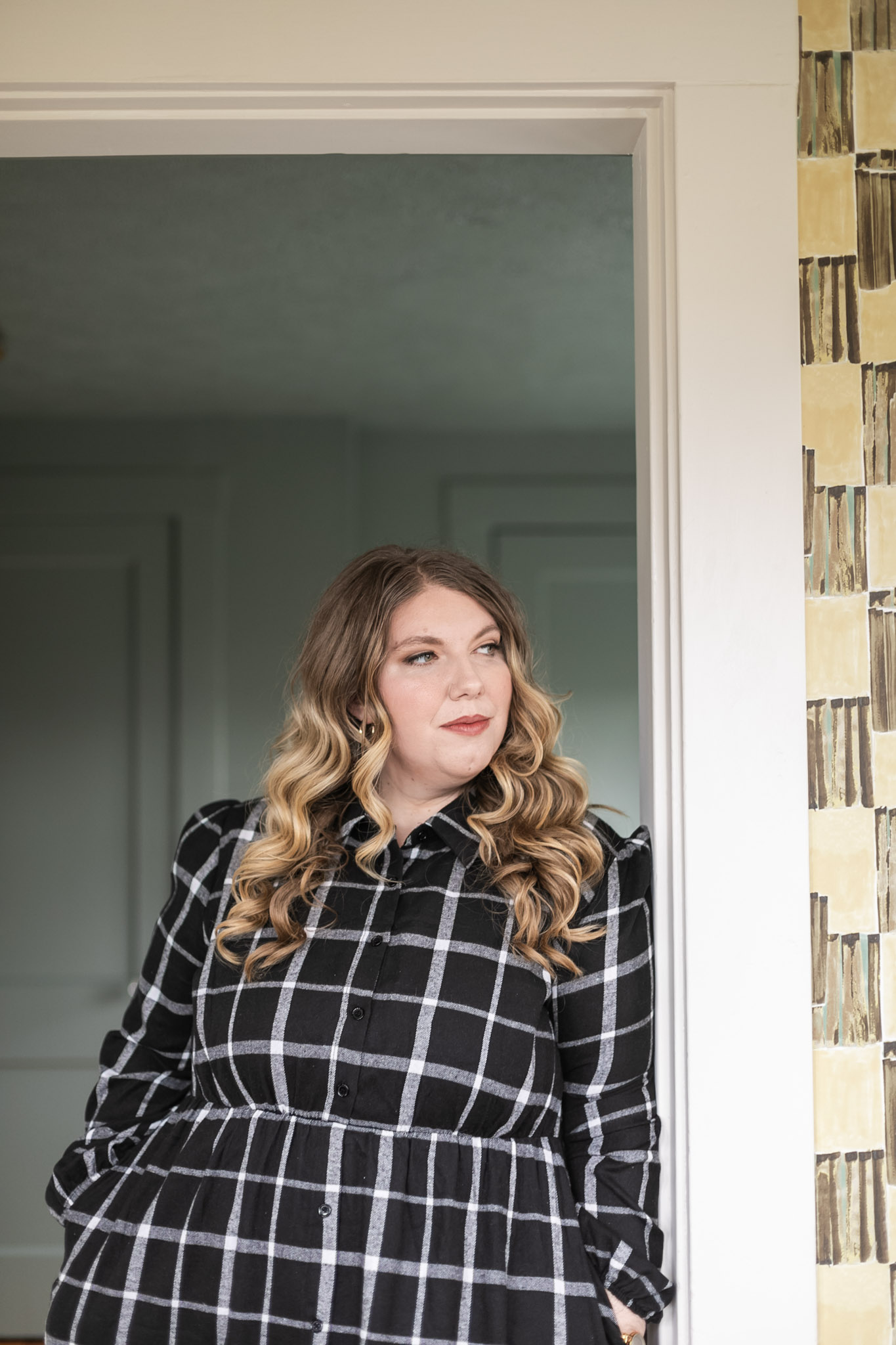
If you’ve ever walked into a normal Wednesday morning, but found yourself quite totally a different person by Wednesday afternoon then you’ll resonate with these sketched sentiments below. The experience of living in a moment that suddenly becomes quiet, yet visceral, and slightly disorienting is one that rattles the best of us. I’m reorienting after a season of the same and what I’ve noticed the most is the lingering hyper-vigilance after this intense season. Questions like “had all of that really happened” circled my brain and watching as Seattle rolled into view from an airplane window, I realized that my body still felt on call, the numbness finally lifting, and sensory overload nosediving back into my system.
In seasons like this, exhaustion often hits after the crisis ends because up until then, you’ve been a dog with a bone just working around the clock. And the funny thing is, you could keep going, and so could I. Hyper-vigilance in adulthood has a different flavor that often includes emotional exhaustion, nervous system overload, and a post-crisis hangover (sometimes even when there’s not a crisis). Women get dismissed easily when it comes to exhaustion because we quite truly endure so much by a day’s end with a steady sense of self and often a controlled smile that our experience is often brushed off as dramatized anxiety. But, with the body output that hyper-vigilance asks of us… eventually, the body asks the question the mind has been outrunning for weeks: how much longer can we live like this?
Why Exhaustion For The High-Performing Woman Often Hits After The Crisis Ends
The body processes slower than the mind; your intellect will tell you that the season is over, and, thus, you should be able to let go and relax. Science and the way the body works tells us differently, but your explore page on Instagram will just tell you to discipline harder, make a more productivity-aligned plan, and up your protein.
All the while, your body is actively going through an adrenaline withdrawal. It’s in the process of down-shifting from prolonged emotional vigilance. If you’ve ever thought after a hard season — or even a difficult day of motherhood — “I thought I’d feel relief immediately,” then you know exactly what it feels like. Your chest might feel heavy, your breath shallow, your neck tense, a tad cottonmouthed in a way that water cannot quench, a heaviness in your legs every time you try to move forward, and the ever-clear desire of “if I can just lay down for a little while, but I can’t.”
The concept that most women have to contend with is that: functioning ≠ recovery
Recovery has a structure to it that doesn’t just include constantly standing back up to do the next thing on the to-do list. Busyness has its place in the grief that comes after a difficult season of endurance, but it’s not the full thesis. I talked about your life requiring you to ignore yourself and grief seasons more in this article and this article.
Exhaustion often hits after the crisis ends because your body is so beautifully intelligent. The body knows when there is mental, emotional, and physical space for collapse. The body knows when to turn off certain sentiments and may even slow the desire to sleep or lessen the need for food because digestion is taking a hiatus to give you everything you need to make clear decisions with your brain without the brain and stomach signaling that your body is hungry.
Nervous system overload is bodily intelligence that once you see it — and really notice it — you’ll never be able to unsee it. The thing is, if you do not notice it… You’ll still continue to hyper-perform as a high-performing woman and the vigilance will not rest.
What Hyper-Vigilance Actually Looks Like In Adulthood
Hyper-vigilance in adulthood rarely looks dramatic. There’s a re-entry shock that blurs the line between emotional numbness and true rest.Since functioning doesn’t equal recovery, it can be hard to spot hyper-vigilance if you’re not looking for it.
It’s often in the:
- Anticipating
- Carrying
- Coordination
- Scanning
- Logistics
- Monitoring of everyone else
- Staying emotionally functional while scared
This is what my experience was like after being away from my home and my life in Seattle, Washington for the last 30 days. My husband and I moved from North Carolina in late 2025 to begin our lives in Seattle and one of our biggest logistics conversations revolved around a few contingency plans regarding our family members in Florida.
I’d just returned from Florida several weeks — before leaving again about a month ago — because a family member was experiencing medical needs. My husband, Chris, and I stayed in Florida for a little over a week together before I decided to stay for another week to continue supporting my family. Finally, I flew to North Carolina and drove home alone to Seattle (which, to be honest, was a beautiful spiritual pilgrimage of sorts and also a tad unnerving as a woman).
Thus, we’d be in Seattle again together for just under 6 weeks before I was taking a red-eye straight to a Florida intensive care unit (ICU) where we stayed for 25 days as we had one foot earthside and one foot on the otherside.
The logistics of a couple with busy careers, a country apart, slowly building new community and rhythms in a new city, and a senior dog with a need for three walks a day and medicine twice a day… well, it was layered to say the least.
The coordination it takes to quickly get to Florida, have heart-crushing phone calls day-in-and-day-out about progress (or lack thereof), discussing terms with surgeons and a full care team that I wouldn’t have understood if I hadn’t been raised on ER and recently went through all 23 seasons of Grey’s Anatomy.
Between anticipating family needs, working around or facilitating family coordination, sleep deprivation, the ache of caretaking, being emotionally usable, and feeling emotionally stretched — I was finding myself in a season I had been in before in other ways.
You’ve been in them, too. If you’re a mother, much of this will read like your post-partum experience. If you’ve lost your grandparents or parents, you know what this feels like. If you’ve walked through the intensity of chronic illness and chronic conditions, you know what it’s like. If you’ve built businesses from the ground up, hired every team member, touched every operative experience inside of the portfolio, then you know what this is like, too.
I wrote more about coming home from Florida and the lingering hyper-vigilance story on The Deep Edit — my Sunday newspaper hundreds of women receive every week.
As a high-performing woman, I know what it’s like to have the body crash after survival mode. Again, we’re back to the body being incredibly intelligent. Magnificently made in a way that knows how to turn on and off with intention.
The illustration of this pattern is clear, when you’re the most adult-y adult in the room — you’ll work yourself into a standard protocol of competence that doesn’t turn on and off unless you begin to lessen the load on your shoulders. Either through your own way of being, how you allow others to also anticipate, carry, coordinate, scan, monitor, and logistic through a season or you just continue carrying it all.
Why High-Functioning Women Miss The Signs Of Nervous System Overload
The women I often work with, and did work with through my previous business consulting firm, are not incapable. Far from it. They’re not “broken” either and would scoff at the suggestion. They are over-relied upon. They are carrying invisible labor and becoming resentful of it, but aren’t often sure where to start to divy it all out without the ever-looming guilt of how much more they should be able to do. They’re emotionally carrying the nuance of their homes and operative structures. They have decision fatigue, are exhausted from reality-holding, and feel as though they are under-supported in their lives and often their careers. Some of them have developed high-functioning anxiety that doesn’t debilitate them into a functional-freeze reaction, but instead motivates them to never pause, never reorient, never stop, and to always keep going.
Discipline is already whipping them into shape. The case studies show so. It’s a bit of a joke to suggest that they should have more discipline. They’re there already and that’s why they feel unsupported, even by the internet at large giving them the beginner’s version of mindset support, nervous system regulation, and balancing their desired lifestyle with their ever-increasing ambition. They’re wondering if they’re always going to be the only one who has their own back. They have such an emotional range that compartmentalization has won over their bodies to stay usable in difficult times.
I shared more about why discipline isn’t often the problem for high-performing women (and what is) in this article on The Essential Exchange.
The signs of burnout in women are often dismissed — not just by others, but by ourselves. From lingering fatigue despite a decent amount of rest, increased irritability, brain fog, withdrawal from spaces and experiences of joy and social activities, emotional numbness or a “flatness”, and physical symptoms like headaches or muscle tension… These all can often get lumped into one sentence: “I’m just tired.”
And this is the point where we work intentionally to build the lifestyle infrastructure that gives you the space to move from “I’m just tired” to recognizing what else exists in your life that is contributing to your exhaustion, even if you didn’t just get out of a 30-day-long-crisis.
To be fair, reader, your crisis may be five years long if you haven’t considered the below before.
What I’d guide you to evaluate:
- Your chronic anticipatory responsibility
- The invisible labor in your life
- Your emotional operating system
- How you are reinforcing how capable you are (while needing help)
- The tired identity of “the strongest person in the family”
- Who holds the most decision fatigue
- Your chronic anticipatory responsibility
That’s where the true crisis may live for you in this season.
Why Most Productivity Systems Fail High-Capacity Women
During difficult seasons most high-performing women will pick their schedules right back up where they left off. And often, they’re knee-deep in content consumption that reminds them to do so, otherwise, they’re “self-sabotaging” or “limiting their potential” or “just need to discipline harder.”
Most productivity systems:
- assume stable capacity
- ignore emotional labor
- don’t account for grief/caregiving
- rely on self-override
- optimize output instead of sustainability
Inhabitable adulthood looks at schedules, capacity-planning, and operations with a lot more nuance because anyone can use a productivity system.
Most weekly planning tools look like this:
- Brain dumps
- Prioritization
- Calendar blocking
- Delegation
Those mechanics are generic and we’ve all used them before.
A high-capacity woman usually already is a woman who has:
- Already has systems
- Already performs well
- Has done years of inner work
- Is tired of carrying everything in their brains
- Wants a life that feels inhabitable, not merely efficient
- Especially in the midst of a difficult season
This is why I introduced my clients to something called Weekly Harmonies™ during my time as a business consultant because I recognized that women could have productivity systems and prioritization blocks with me all they want, but once the phase of their lives or even their monthly cycles come into the conversation… Things needed to shift.
Weekly Harmonies™ helps clients assess:
1. Their Internal State
Energy, Mood, Emotional Load, Cycle Phase, The Full Pie of Life and Which Section Their Inhabiting Deeper That Quarter
2. Current Capacity
What can realistically be held, what is too much, and where support is needed
3. Meaningful Priorities
What truly matters this week that connects to their quarterly and annual goals and what can wait
4. Structural Supports
Delegation, Boundaries, Systems, Rhythms
5. Reflection and Learning
What to celebrate, what worked, what depleted them, and what needs to shift next week
Weekly Harmonies™ is a living feedback loop — not just a planning checklist. Again, I created an integrated system based on what I noticed that most weekly planning systems were missing when working with high-performing women running 6-8 figure brands with full lives and big families.
Often, the run-of-the-mill system just accidentally adds more productivity + hustle without true rhythm and devotion to a life that ebbs and flows as we know they do as women.
This method is a life integration practice designed for the high-capacity woman who is used to over-performing. And often, by the end of the week, she isn’t seeking more discipline. She’s seeking more presence, recovery, and a deeper sense of fulfillment inside the life she’s built.
Returning To A Life Your Nervous System Can Actually Inhabit
This experience in Florida reinforced why I built my life differently than I once had. I woke up one day in 2021 and realized that I had built a life that was beautiful, full, and asked far too much of me on a daily basis.
In high school, I walked through a chronic condition experience that led me to look at the other side of life. Western medicine wasn’t supporting the chronic condition enough to give me space to find the root. Like clockwork, every time I had my menstrual… the condition would return just a few days later.
That experience led me towards a path of whole-bodied living in a harmonious way. From nervous system regulation to cycle syncing to different methods of movement and lymphatic drainage long before it was a trend on TikTok and just a natural way of life in Chinese Medicine. If I look back at my life and career with hindsight, I can see how wonderfully my work has been weaved into my living this whole time. I share more about that here and why mastery in personal development is measured differently than most things.
In 2023, I went on a one-night retreat in the mountains. One night was all I could spare during that season of my life and business and I found myself looking out at a pond behind the Airbnb (lovingly called The Pond House), swinging slowly on a hammock wondering why more of the work I see in the world only focuses on the outputs, the discipline, the formation of it all without the function of a truly harmonious life.
Blame the patriarchy and late-stage capitalism if you want easy answers, but if we seek deeper… What exists in our bodies that says “yes” continuously to these systems that ask us to create lives that our nervous systems cannot actually live within?
I returned home from that trip with the curriculum I currently teach now in much more depth than ever before. After rounds of The Harmonious Living Program with incredible women from all around the world, I’ve seen what a life that truly listens to its own nervous system can do for the high-performing woman.
Over the next 30 days, I’ll be sharing how I’m returning to my adaptive rhythms in Seattle with my love, Chris, and our one-eyed senior dog, Ripkin, as I serve women all around the world through my work as a lifestyle designer.
I coach women to create a decision-supported life with emotional margin. High-capacity women often come to me when they’ve been chronically — emotionally and physically — bracing against their own lives. If you’d like to continue reading and seeing this work come alive, then I invite you to continue reading here on The Essential Exchange, join my newsletter community, and connect with me on Instagram.
If you’re creating a sustainable adulthood with life architecture to back it up, then this is the place for you. Thank you for being here.
Media Links:
Henry, Ashleigh C. “When Your Life Requires You to Ignore Yourself — And Discipline Isn’t the Problem.” Ashleigh C. Henry, 19 Mar. 2026, https://ashleighchenry.com/2026/03/19/when-your-life-requires-you-to-ignore-yourself-and-discipline-isnt-the-problem/.
Henry, Ashleigh C. “The Cheetah Company.” Ashleigh C. Henry, 28 July 2025, https://ashleighchenry.com/2025/07/28/thecheetahcompany/.
“ER (TV Series).” Wikipedia, Wikimedia Foundation, https://en.wikipedia.org/wiki/ER_(TV_series).
“Grey’s Anatomy.” Wikipedia, Wikimedia Foundation, https://en.wikipedia.org/wiki/Grey%27s_Anatomy.
Henry, Ashleigh C. “The Deep Edit.” MailerLite, https://preview.mailerlite.io/preview/1378492/emails/188390291238028854.
Henry, Ashleigh C. “When Your Life Requires You to Ignore Yourself — And Discipline Isn’t the Problem.” Ashleigh C. Henry, 19 Mar. 2026, https://ashleighchenry.com/2026/03/19/when-your-life-requires-you-to-ignore-yourself-and-discipline-isnt-the-problem/.
Henry, Ashleigh C. “Case Studies.” Ashleigh C. Henry, https://ashleighchenry.com/case-studies.
Henry, Ashleigh C. “Inhabiting the Work: Why Mastery in Personal Development Isn’t Measured by How Much You’ve Done.” Ashleigh C. Henry, 6 Aug. 2025, https://ashleighchenry.com/2025/08/06/inhabiting-the-work-why-mastery-in-personal-development-isnt-measured-by-how-much-youve-done/.
“Modern Mountain Retreat.” Airbnb, https://www.airbnb.com/rooms/40798860
Henry, Ashleigh C. “The Harmonious Living Program.” Ashleigh C. Henry, https://ashleighchenry.com/group-coaching.
Henry, Ashleigh C. “Instagram Profile.” Instagram, https://www.instagram.com/ashleighchenry/.


